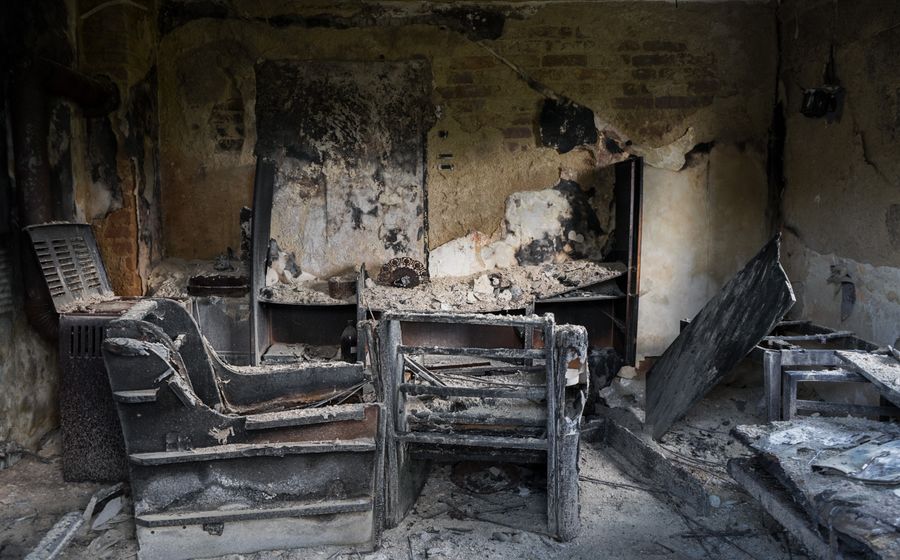
Fire & Smoke Damage Restoration Cost in Tampa, FL
In the Tampa, FL area, professional fire and smoke damage restoration typically runs about $3,000 to $52,000 per job, averaging roughly $11,900 for cleanup and around $27,000 once structural repairs are included, at $4 to $7 per square foot.
Last updated June 2026
$3,000–$52,000 per job (whole-home restoration in the Tampa, FL metro); light single-room smoke/soot cleanup can start near $2,500, while a severe structural fire with full reconstruction can exceed $100,000
These are estimates, not a quote. Your actual cost depends on the factors below — always confirm with an itemized, written estimate before work begins.
What affects the cost
| Factor | Effect on cost |
|---|---|
| Severity and fire category (minor smoke vs. full structural fire) | The single biggest cost lever. Light smoke/soot cleanup of a room or two runs $2,500-$5,000, while a structural fire that destroys framing, roof, and systems can push past $50,000-$100,000+. Restoration averages $4-$7/sq ft for cleanup but jumps when rebuilding is required. |
| Home size (square footage affected) | Priced largely per square foot. Fixr/Angi data: ~$4,000-$7,000 for 1,000 sq ft, ~$8,000-$14,000 for 2,000 sq ft, and ~$16,000-$28,000 for 4,000 sq ft. Larger affected areas and more rooms mean proportionally higher cleanup and labor costs. |
| Smoke type and soot chemistry | Dry smoke (paper/wood) cleans relatively cheaply ($400-$700); oily/wet smoke and protein (kitchen-grease) residue is sticky, smeary, and acidic, often $1,000+ and needing alkaline degreasers plus agitation. Soot is acidic and corrodes electronics and yellows surfaces within days, so residue type drives both method and price. |
| Soot/smoke cleanup and burnt-material removal | Per Fixr/HomeGuide: smoke damage $200-$1,200, burnt materials $300-$1,600, soot $400-$1,700, and chemical residue $600-$2,000. Heavier soot loads and porous materials (carpet, drywall, insulation) that must be removed rather than cleaned add cost. |
| Water damage from firefighting and sprinklers | Extinguishing a fire soaks the structure. Water extraction and drying typically adds $1,000-$6,000 (Angi) and $3,000-$6,000 per room (HomeGuide). In Tampa's humidity this is urgent because trapped moisture can trigger mold within 24-48 hours, compounding the bill. |
| Florida humidity and mold risk | Tampa's high year-round humidity makes soot stickier and harder to remove from porous surfaces and accelerates mold growth on fire-related moisture. This often adds drying, antimicrobial treatment, and sometimes mold remediation (a FL-licensed activity for larger jobs) to the scope and total. |
| Odor removal and deodorization | Smoke odor that settles into walls, contents, and HVAC needs specialized treatment: thermal fogging $200-$600, ozone treatment $300-$800, furniture deodorizing $200-$1,000, plus air scrubbing. Florida heat and constant AC use can recirculate odor through ducts, often requiring repeated deodorization. |
| HVAC and duct contamination | Soot and odor pulled into the air-handler and ductwork spread to untouched rooms when the AC runs. Duct cleaning runs about $250-$500, and contaminated HVAC components may need cleaning or replacement, adding to the total in central-air-dependent Florida homes. |
| Structural repair and reconstruction | Cleanup is separate from rebuilding. Wall repair $1,000-$3,000, window replacement $300-$2,100, roof replacement $5,900-$12,800, and severe structural damage $15,000-$25,000 per room. Standard rebuild runs ~$50/sq ft and full reconstruction $100+/sq ft. |
| Contents cleaning vs. replacement | Belongings (furniture, clothing, electronics) are cleaned, deodorized, or replaced. Content removal/processing can run $50-$100 per pound, and acidic soot can ruin electronics quickly, so contents are often a meaningful line item separate from structure (and split that way on insurance claims). |
| Labor share and emergency/after-hours response | Labor is 50-70% of the total at roughly $65-$90/hour. Fire is an emergency, so 24/7 mobilization, board-up, and tarping carry premiums. Acting within 24-48 hours limits secondary damage and usually lowers the eventual total. |
| Insurance, deductible, and documentation | What you pay out of pocket often equals your deductible, not the full bill. Florida's standard All-Other-Perils deductible (commonly $1,000-$2,500) applies to fire claims. Thorough scoping and documentation to IICRC S700 standards affects approval and the covered amount. |
How we estimate
Figures are national published ranges from cost aggregators (Angi, HomeAdvisor, Fixr, HomeGuide), localized with Florida-specific insurance and climate context; they are planning estimates, not quotes. Cleanup-only jobs average ~$11,900 ($4-$7/sq ft) covering soot/smoke removal, deodorization, water extraction, and sanitizing; once structural repair/reconstruction is added the all-in average rises to ~$27,000 and can exceed $50,000-$100,000 for severe fires. Typically INCLUDED in restoration: emergency board-up, soot/residue cleaning, deodorization (thermal fog/ozone/air scrubbing), water extraction and drying, antimicrobial treatment, HVAC/duct cleaning, and disposal. Often SEPARATE or add-on: full reconstruction, roof/window replacement, contents pack-out and cleaning, and mold remediation (a FL-licensed activity for larger scopes). Florida insurance context: fire and resulting smoke are named perils covered under standard FL homeowners policies (Fla. Stat. 627.7011), including dwelling, contents, debris removal, and additional living expenses; you generally pay only your All-Other-Perils deductible (commonly $1,000-$2,500), and insurers must acknowledge a claim within 7 days and pay/deny within 90 (Fla. Stat. 627.70131). To get an accurate itemized quote: call IICRC-certified (FSRT/S700) restorers for 24/7 emergency assessment within 24-48 hours, get a written room-by-room scope separating structure from contents and cleanup from reconstruction, confirm whether mitigation and rebuild are one contractor or two, and have them coordinate documentation with your insurer's adjuster before work begins.
Sources
- Angi — How Much Does Fire Damage Restoration Cost? (avg $27,477; range $3,083-$52,031; soot, water, deodorizing, fogging, ozone line items)
- HomeAdvisor — How Much Does Fire and Smoke Remediation Cost? (avg ~$27,091; range $3,098-$51,243; $4-$7/sq ft)
- Fixr — Fire Damage Restoration Cost (avg $11,900; $2,500-$50,000; $4-$6.50/sq ft; smoke/soot/water breakdowns; thermal fogging & ozone)
- HomeGuide — Fire Damage Restoration Cost (smoke $200-$1,200, soot $400-$1,700, water $3,000-$6,000, structural $15,000-$25,000, labor $65-$90/hr)
- IICRC — ANSI/IICRC S700 Standard for Professional Fire and Smoke Damage Restoration
- IICRC — Fire and Smoke Restoration Technician (FSRT) certification overview
- Louis Law Group — Florida Fire Damage Insurance Claim (Fla. Stat. 627.7011 fire coverage; AOP deductible; 627.70131 timelines)
- AdvantaClean (FL) — Why smoke smell comes back: HVAC, humidity, and Florida-specific odor recurrence
Frequently asked questions
How much does fire and smoke damage restoration cost in Tampa, FL?
Expect roughly $3,000 to $52,000 per job, with cleanup-only work (soot/smoke removal, deodorization, water extraction) averaging about $11,900 and the all-in average rising to around $27,000 once structural repairs are included. Restoration is commonly priced at $4 to $7 per square foot of affected area. Light single-room smoke or soot cleanup can start near $2,500, while a severe structural fire requiring full reconstruction can exceed $50,000-$100,000. Your actual out-of-pocket cost is usually limited to your insurance deductible. These are national published ranges (Angi, HomeAdvisor, Fixr); always get an on-site itemized estimate, because fire severity, home size, and smoke type vary enormously.
What does the cost look like by severity (minor vs. moderate vs. severe)?
Minor: surface smoke and light soot in one or two rooms, no structural damage, typically $2,500-$5,000 for cleaning and deodorizing. Moderate: multiple rooms with soot, smoke odor in the HVAC, and water damage from firefighting, often $8,000-$20,000 including drying, duct cleaning, and some drywall/paint repair. Severe: structural fire with charred framing, roof/window damage, and contents loss, frequently $25,000-$52,000 and beyond, since structural damage alone can run $15,000-$25,000 per room and full reconstruction runs $50-$100+ per square foot. The jump between tiers is driven mainly by whether you are only cleaning or also rebuilding.
Does homeowners insurance cover fire damage in Florida?
Yes. Fire, and the resulting smoke and soot, are named perils covered under virtually every standard Florida homeowners policy, and Florida Statute 627.7011 requires fire coverage. Coverage typically extends to the dwelling, other structures, personal property (contents) damaged by fire or smoke, debris removal, and additional living expenses if you can't stay in the home during repairs. Accidental fires are covered even if caused by your own negligence (e.g., an unattended candle or grease fire); only intentional fires are excluded. You generally pay your All-Other-Perils deductible (commonly $1,000-$2,500), not the full bill. Under Fla. Stat. 627.70131, your insurer must acknowledge the claim within 7 days and pay, deny, or partially pay within 90 days. Notify your insurer immediately and document everything.
How long does fire and smoke damage restoration take?
It depends on severity. Emergency response (board-up, tarping, water extraction) happens within hours to the first day or two. Light smoke and soot cleanup with deodorization usually takes a few days to about a week. Moderate jobs with HVAC cleaning and some structural repair commonly run two to four weeks. Severe fires requiring demolition and full reconstruction can take several months. In Tampa, the humidity makes the first 24-48 hours especially time-critical, because trapped firefighting moisture can start growing mold within a day or two, which adds both time and cost if not addressed quickly. Restorers prioritize fast mitigation specifically to keep the total timeline and price down.
How do professionals remove smoke smell and odor after a fire?
Odor removal is a distinct, multi-step process beyond surface cleaning. Technicians clean soot and residue from all surfaces (smoke odor clings to anything porous), then deodorize using thermal fogging ($200-$600), ozone treatment ($300-$800), hydroxyl generators, and air scrubbing, and they deodorize contents like furniture ($200-$1,000). Critically, they clean the HVAC system and ducts ($250-$500), because smoke settles into the air handler and, when the AC runs in Florida's heat, redistributes odor and soot to rooms the fire never touched. This is also why smoke smell often 'comes back' after a DIY clean: untreated residue in walls, insulation, and ductwork keeps off-gassing until professionally sealed or removed.
Can I stay in my home during fire and smoke restoration?
For minor, isolated smoke damage you may be able to stay, but for moderate-to-severe fire damage it's usually unsafe and not recommended. Soot is acidic and a respiratory and skin irritant, lingering smoke contains toxic combustion byproducts, structural and electrical integrity may be compromised, and ozone deodorization treatments require an unoccupied space. Firefighting water can also create mold and humidity hazards in Florida's climate. If you can't live in the home during repairs, your Florida homeowners policy's Additional Living Expenses (ALE) coverage typically reimburses temporary housing and related costs. Your restoration company and insurance adjuster will advise when re-entry is safe.
What's included in a fire and smoke damage restoration estimate?
A typical scope includes emergency board-up and tarping, water extraction and structural drying (firefighting water), soot and smoke residue cleaning of surfaces, removal and disposal of unsalvageable burnt materials, deodorization (thermal fogging, ozone, air scrubbing), antimicrobial/sanitizing treatment, and HVAC/duct cleaning. Often quoted separately or as add-ons: full structural reconstruction (drywall, framing, roofing, windows), contents pack-out and cleaning, electronics restoration, and mold remediation, which in Florida is a state-licensed activity for larger jobs. Labor is 50-70% of the total. A good estimate is itemized room by room and clearly separates cleanup/mitigation from rebuild, and structure from contents, which also matches how insurers split the claim.
What's the difference between structure and contents costs, and why does it matter?
Structure (or 'dwelling') costs cover the building itself, walls, ceilings, floors, framing, roof, and built-in systems. Contents (or 'personal property') costs cover your belongings, furniture, clothing, electronics, and household goods. They're estimated and often billed separately, and contents processing can run $50-$100 per pound for pack-out, cleaning, and deodorizing. This split matters because Florida homeowners policies cover dwelling and personal property under different limits, and acidic soot can ruin electronics and corrode metals within days, so contents are frequently triaged early into 'clean,' 'deodorize,' or 'replace.' Keeping a documented inventory with photos helps maximize your contents claim and speeds reimbursement.
Why is smoke and soot damage worse in Florida's humid climate?
Tampa's high year-round humidity compounds fire damage in two ways. First, moisture in the air binds with soot particles, making them stickier and harder to remove from porous surfaces, and the wrong cleaning agent can 'set' the stain or drive particles deeper. Second, firefighting water plus humidity creates ideal conditions for mold, which can begin within 24-48 hours and turn a fire job into a fire-and-mold job, adding remediation cost. Constant air-conditioning also recirculates lingering odor and soot through ductwork. This is why Florida restorers emphasize fast professional mitigation, proper dehumidification, and HVAC treatment rather than DIY cleaning, which often leaves acidic residue and recurring odor behind.
How do I choose a fire and smoke damage restoration company in Tampa?
Look for IICRC certification, specifically the Fire and Smoke Restoration Technician (FSRT) credential and adherence to the ANSI/IICRC S700 standard, which is the consensus industry standard for assessing and restoring fire/smoke damage. Verify Florida licensing and insurance, confirm 24/7 emergency availability (the first 24-48 hours matter most), and ask whether they handle both mitigation and reconstruction or only one. Request a written, itemized, room-by-room scope that separates cleanup from rebuild and structure from contents, and confirm they will document to your insurer's adjuster and bill insurance directly where possible. Read recent local reviews, check that they carry mold remediation capability (a FL-licensed activity), and get more than one estimate for larger jobs.
Get an exact price for your fire & smoke damage restoration job
Compare vetted fire & smoke damage restoration companies in Tampa, or request a free quote and we'll match you with pros who can give you an itemized estimate.